Abereiddy Promontory Fort
Ancient siteSmall promontory fort on the headland at Abereiddy, beside the Blue Lagoon — Iron Age defence, slate-age quarrying, one headland.
 Photo: Tevfik Teker (CC BY 3.0)
Home of the Blue Lagoon: a flooded slate quarry beside a dark-sand beach, with quarry ruins, fossils and coasteering off the rocks.
Abereiddi is a beach, a car park, a ruined quarry village and one of the most photographed pieces of water in Wales. The Blue Lagoon is a slate quarry that was deliberately breached to let the sea in when the workings closed, leaving a deep, sheltered, startlingly blue-green pool connected to the ocean by a narrow channel. It became a venue for international cliff diving competitions, and on any summer day you will see coasteering groups traversing the walls and jumping from the marked ledges. If you are not with a guided group, treat the jumps with respect: depths vary with the tide and the rock is slate.
The beach beside it is dark grey rather than golden — crushed slate and shale — and it is a good place to find graptolite fossils in the loose flat stones. Above the shore stand the roofless shells of the quarry workers' cottages, abandoned after a storm in 1910, and the tramway that ran the slate to Porthgain. The Coast Path north to Porthgain, via the sandy cove of Traeth Llyfn, is one of the best short walks in the national park.
There is no village left to speak of: no shop, no pub, a single car park that fills by mid-morning in August, and portable facilities in season only. Come for the swimming, the walking and the industrial archaeology, and expect to drive for everything else — St Davids and Whitesands are fifteen to twenty minutes, Porthgain five.
A handful of houses sit above the bay with sea views and the Coast Path from the door; they are scarce and book well ahead. Most visitors stay in Croesgoch, Llanrhian or Trefin a few minutes inland, where cottages and farm conversions come with parking and gardens, or on one of the campsites along this stretch of coast.
Reached by lanes from the A487 at Croesgoch, signposted Abereiddi. The road ends at the beach car park, which is small and fills early in summer.
We haven’t hand-picked stays in Abereiddi yet — try the full search or nearby destinations below.
 Dogs all year
Black sand, a flooded slate quarry of improbable blue-green, and coasteering's most famous jump-off.
 Dogs all year
A big sandy cove between Abereiddi and Porthgain, reached by a steel staircase bolted to the cliff — and cut off at high tide.
 Dogs all year
The rocky cove below Trefin, with the ruined mill on the shore — a five-minute walk from the village and no sand to speak of.
 Dogs all year
A sheltered working-harbour cove between Trefin and Mathry — kayaks, crab lines and a 5,000-year-old tomb up the hill.
 Dogs all year
A storm-built pebble bank with woodland and marsh behind, and firm sand appearing only at low tide — quiet, moody and rarely busy.
 Dogs all year
The drying harbour at the head of Solva's ria — boats on the mud, crabbing off the wall, sand at low water.
Compare all 8 beaches near Abereiddi — distance, dogs, lifeguards, parking →
Pubs, restaurants, cafés, attractions and activities in and around Abereiddi.
Everything to do in and around Abereiddi, in one place →
Small promontory fort on the headland at Abereiddy, beside the Blue Lagoon — Iron Age defence, slate-age quarrying, one headland.
Aberelddy Road
A short, spectacular cliff walk between two abandoned quarry harbours, past the flooded slate pit everyone photographs.
3 miles · 1½ hours each way · Easy

From an industrial harbour past the Blue Lagoon and round the wild north side of the St Davids peninsula to the county's most popular beach.
8 miles · 4½–5 hours · Moderate
Two easy miles linking two of the best small stops on the north coast — the ruined mill and beach at Aber Draw to the harbour, brickworks and famous fish and chips at Porthgain.
2 miles · 1 hour each way · Easy
Every walk starting near Abereiddi — distance, ascent, parking →

Pembrokeshire's postcard town: pastel Georgian houses above three superb beaches, a working harbour and medieval walls — the classic Welsh seaside holiday.
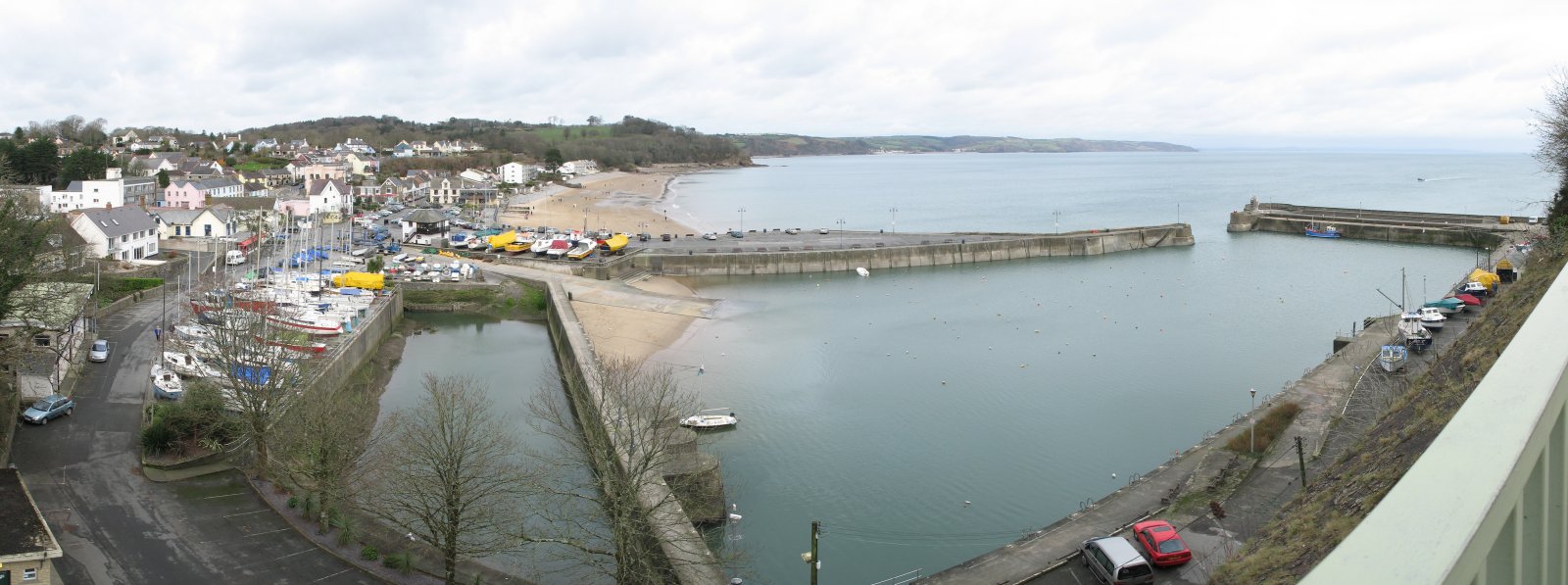
Big sandy beach, busy little harbour and a proper seaside village centre — Tenby's more relaxed neighbour, three miles up the coast.

Britain's smallest city — a cathedral in a hollow, Whitesands Bay up the road, and the wildest, most beautiful corner of the national park all around.