Celtic Quest Coasteering
ActivitiesCoasteering-only specialists at Abereiddy — scramble, swim and jump around the Blue Lagoon coast with a company that does nothing else.
- Website
- celticquestcoasteering.com
Sheltered bays, a flooded slate quarry and water that never really warms up — sea swimming here is superb and needs treating seriously.
Sea swimming in Pembrokeshire is very good and very cold. The water sits somewhere between 8 and 15°C for most of the year, peaking in late August and September, and the beaches that look most inviting are not always the ones you should be getting into.
The sheltered south-coast bays are the classics. Barafundle has no road to it and no facilities, which is why it still looks the way it does, and the swimming is superb on a calm day — clear water, sand underfoot, and a walk in from Stackpole Quay that filters out the casual. Broad Haven South next door has Church Rock offshore to swim towards, though it is further than it looks. Stackpole Quay itself is a tiny National Trust harbour with steps into deep, clear water and is a favourite with local swimmers precisely because you can get in without wading.
On the north coast, Cwm-yr-Eglwys and Pwllgwaelod sit either side of Dinas Island and offer sheltered water in almost any wind — if one is choppy, the other won't be, and the flat valley path between them takes ten minutes. Abereiddi's Blue Lagoon is the strangest swim in the county: a slate quarry breached to the sea when the workings closed in 1910, deep, still and a peculiar green. It is a coasteering and cliff-diving venue, so expect company and do not jump from the walls unguided.
For lifeguarded swimming in season, Whitesands near St Davids, Tenby's beaches and Dale are the sensible choices, and if you are new to open water you should be using them rather than a deserted cove.
A swim here is usually shorter than you plan. Ten minutes is a good swim in May. Twenty-five is a long one in September. The pattern most regulars settle into is get in slowly, swim parallel to the beach rather than out from it, get out before the shivering starts, and spend as long getting warm afterwards as you spent in the water.
Late July to early October is the comfortable season, and September is the pick — warmest water, empty beaches, and the summer crowds gone. Year-round swimming is a real and thriving thing in Pembrokeshire, but it is a habit you build up to over a whole autumn rather than start in January.
What catches people out: cold water shock, every time. The gasp reflex is involuntary, it happens in the first thirty seconds, and it is why people who could swim perfectly well drown. Walk in, breathe out, wait. The second is tidal cut-off — several of the small coves here have no exit at high water and the tide comes in behind you while you are looking at the sea. The third is the assumption that a calm-looking bay has no current. The edges of bays, where water drains back out, are where the rips run.
Take a tow float. Swim with someone. Warm clothes in the car, not in the rucksack on the beach.
Cold water shock is the specific hazard: at 8-15°C the involuntary gasp reflex can put water in your lungs in the first seconds, so get in slowly, get your breathing under control before you swim, and never jump in cold. Swim on a lifeguarded beach between the red and yellow flags in season if you possibly can. Rips are the second hazard, and they exist at [Newgale](/beaches/newgale), [Freshwater West](/beaches/freshwater-west-beach) and at the edges of most of the bigger bays — if you are pulled out, don't fight it, swim across the current. Several beautiful coves here cut off on the rising tide, so check the tide table before you settle in. From late July there are jellyfish, mostly harmless but with compass and lion's mane among them. Never swim alone, and never at [Abereiddi's Blue Lagoon](/beaches/abereiddi-blue-lagoon) with any intention of jumping in from the quarry walls unless you are with an operator.
Bright swim hat and a tow float so boats can see you — both cheap and both worth it. A changing robe is not affectation on this coast; it is how you avoid getting cold after rather than during. Neoprene gloves and socks extend the season by months. Goggles if you are swimming rather than dipping.
Free, unless you count parking, and most of the best beaches here are National Trust or council car parks charging by the hour.
 Dogs all year
Black sand, a flooded slate quarry of improbable blue-green, and coasteering's most famous jump-off.
 Dogs all year
The golden cove with no road — half a mile's clifftop walk from Stackpole Quay, and regularly voted among Britain's best beaches.
 Dogs all year
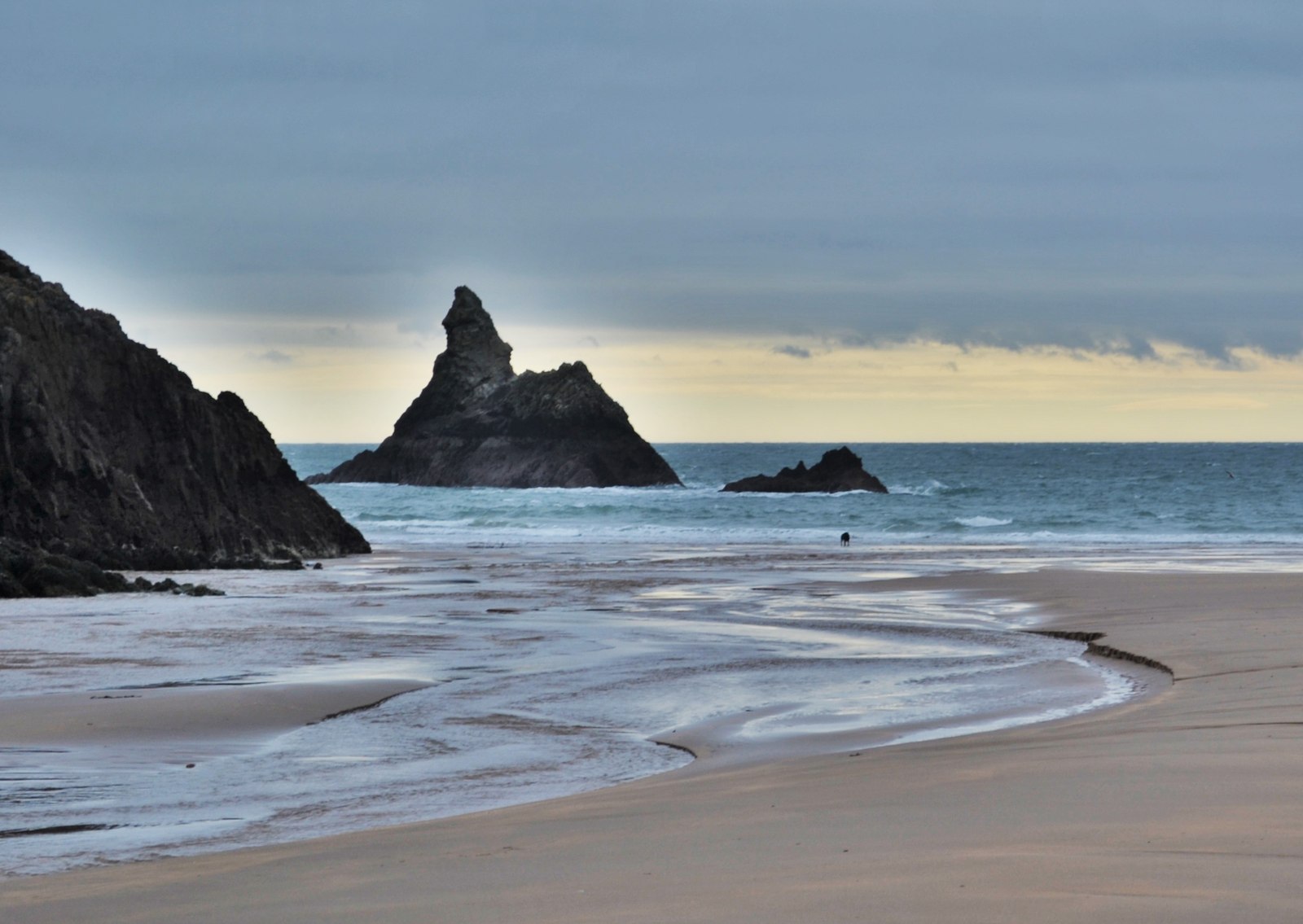
White sand, Church Rock offshore and the lily ponds behind — Bosherston's beautiful back door to the sea.
 Dogs all year
St Davids' walk-to beach: purple-tinged sandstone cliffs, a steep flight of steps and clean sand at low water.
 Dogs all year
A tiny sheltered cove with the ruined bell tower of a storm-wrecked church standing on the beach — the most photographed spot on this coast.
 Dogs all year
The sailing village's sheltered shingle-and-sand beach on the Milford Haven waterway — flat water, boats and a pub on the front.
 Dogs all year
A small tidal cove wrapped in a steep village of pubs and cottages — lovely at low water, gone completely at high tide.
 Dogs all year
The slipway for the Skomer boats rather than a beach — shingle, seals, and the gateway to Britain's first marine nature reserve.
 Dogs all year
A small sheltered cove on the west side of Dinas Island, with parking, a pub and the easiest good walk in north Pembrokeshire.
 Dogs all year
Reputedly Britain's smallest harbour, with a National Trust car park, café and toilets — and the start of the walk to Barafundle.

The small beach between Castle Hill and St Catherine's Island — rockpools, the lifeboat station, and a low-tide walk to the fort.

St Davids' big Blue Flag surf beach beneath Carn Llidi — sand, swell and sunsets at the end of Wales.
The right sort of business within a few miles of the places above. We take no commission from any of them and this isn't a ranking — check qualifications, insurance and group sizes yourself.
Coasteering-only specialists at Abereiddy — scramble, swim and jump around the Blue Lagoon coast with a company that does nothing else.
The boat service from Martin's Haven that lands day visitors on Skomer — the crossing behind every puffin photograph you've seen.
The St Davids operator running landing trips to Ramsey Island's RSPB reserve, plus offshore whale-and-dolphin expeditions towards Grassholm and The Smalls.
The short seasonal crossing from Tenby harbour to Caldey Island — monks, chocolate and quiet beaches twenty minutes offshore.
18 Heol Fawr, St Davids, SA62 6SD
St Davids' original adventure outfit — coasteering, sea kayaking, surfing, climbing and paddleboarding from a shop on the High Street, running for over thirty years.
The surf school and hire shop on Newgale beach — lessons, boards and wetsuits right on the county's biggest learner wave.
Long-running surf school teaching the south county's beaches — lessons, camps and coasteering out of Pembroke.
Horse rides down to and along the sand at Druidston — the gallop-on-a-Welsh-beach photograph, made real for riders of most abilities.
Riding school at East Nolton farm above St Brides Bay — lessons, hacks and riding holidays a field or two back from the coast.
A short, spectacular cliff walk between two abandoned quarry harbours, past the flooded slate pit everyone photographs.
3 miles · 1½ hours each way · Easy

A short, steep circuit of a headland that isn't quite an island, with the ruin of a storm-wrecked church at one end and a beach pub at the other.
3 miles · 1½–2 hours · Moderate
The best short walk in south Pembrokeshire: a cliff path to Barafundle, then inland along three flooded limestone valleys full of lilies.
5 miles · 2½–3½ hours · Moderate
Children swim happily in the sheltered bays through the summer, but keep them on lifeguarded beaches in season and within arm's reach anywhere else. The cold affects small bodies faster than adults expect — a shivering child needs to come out and get dry immediately, not do one more length.
Warmest water from late July to early October. A hardy local contingent swims all year, in increasingly little.
Bright swim hat and a tow float so boats can see you — both cheap and both worth it. A changing robe is not affectation on this coast; it is how you avoid getting cold after rather than during. Neoprene gloves and socks extend the season by months. Goggles if you are swimming rather than dipping.
Free, unless you count parking, and most of the best beaches here are National Trust or council car parks charging by the hour.
Cold water shock is the specific hazard: at 8-15°C the involuntary gasp reflex can put water in your lungs in the first seconds, so get in slowly, get your breathing under control before you swim, and never jump in cold. Swim on a lifeguarded beach between the red and yellow flags in season if you possibly can. Rips are the second hazard, and they exist at [Newgale](/beaches/newgale), [Freshwater West](/beaches/freshwater-west-beach) and at the edges of most of the bigger bays — if you are pulled out, don't fight it, swim across the current. Several beautiful coves here cut off on the rising tide, so check the tide table before you settle in. From late July there are jellyfish, mostly harmless but with compass and lion's mane among them. Never swim alone, and never at [Abereiddi's Blue Lagoon](/beaches/abereiddi-blue-lagoon) with any intention of jumping in from the quarry walls unless you are with an operator.
Answers are generated from what we actually hold in our database and refreshed as it changes. Opening hours, dog rules and prices move — check with the venue before you travel.